
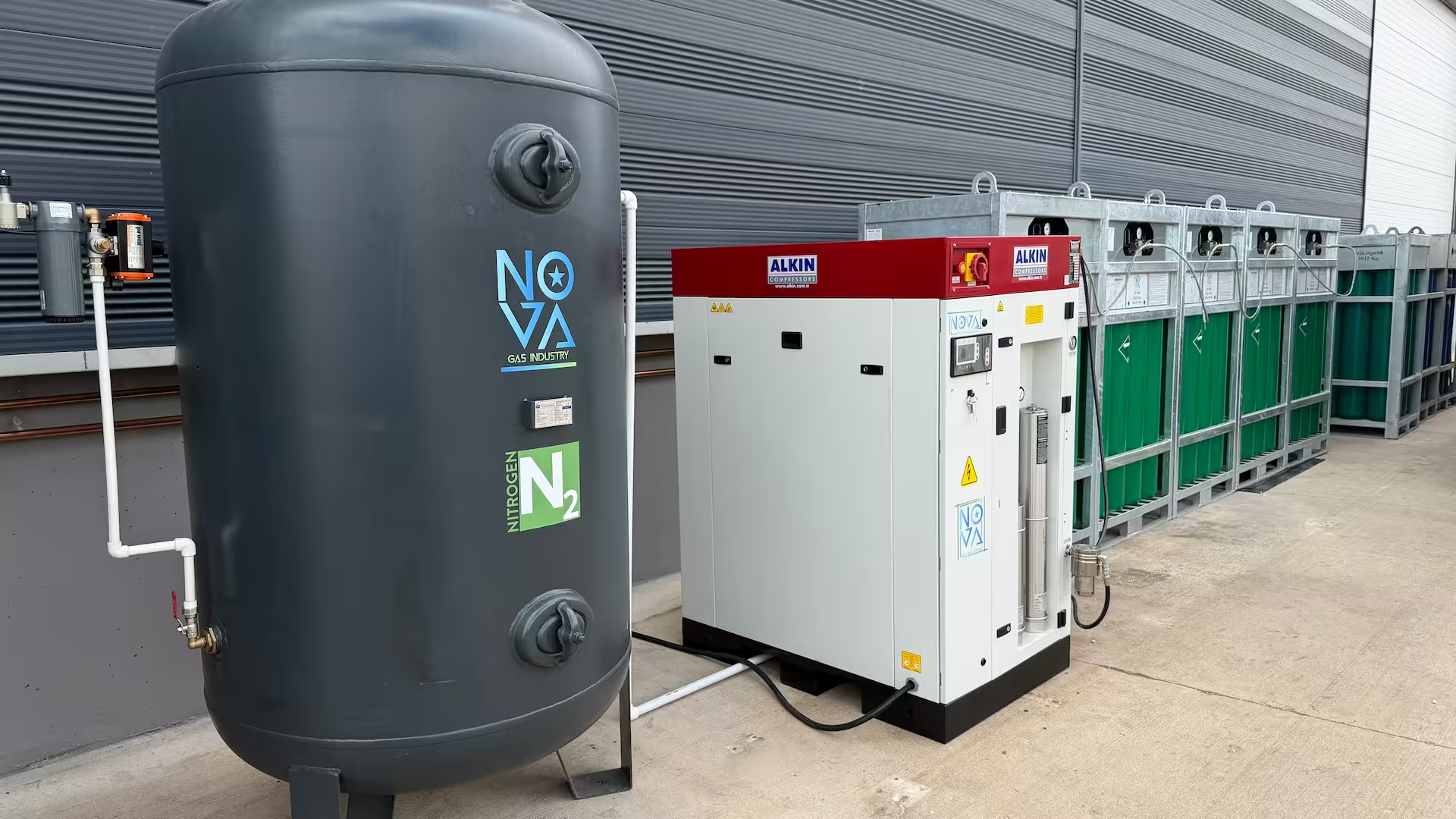
Areas of Use for Nitrogen Gas and the Advantages of On-Site Production
Nitrogen Gas is one of the essential gases supporting quality, safety, and process continuity in many areas of modern industry. Thanks to its inert nature, it helps reduce unwanted reactions in the production environment. Therefore, it has become a common need not just for a specific sector, but for very different branches of manufacturing.
The use of a Nitrogen Generator allows enterprises to produce their required Nitrogen Gas at their own facilities. This setup offers a solution that, especially in enterprises with regular consumption, reduces supply dependency, makes costs more predictable, and increases production control.
In this guide, you can find a comprehensive review of:
The areas of use for Nitrogen Gas
The processes where high-purity Nitrogen Gas needs come to the fore
The advantages of on-site production with a Nitrogen Generation System
The relationship between a Laser Cutting Nitrogen Generator and an Air Laser Cutting System
In Which Sectors Is Nitrogen Gas Used?
Nitrogen Gas is preferred to create a protective atmosphere in production processes, reduce oxidation, manage fire and explosion risks, or support product shelf life. Although the purpose of use varies by sector, the basic expectation is often the same: a controlled, reliable, and uninterrupted gas flow.
Nitrogen Gas takes on different roles in areas such as food, metal processing, electronics, chemistry, pharmaceuticals, plastics, packaging, automotive, and laser cutting. While it is of critical importance for process safety in some sectors, it directly affects product quality in certain applications.
Common areas of use for Nitrogen Gas include:
- Laser cutting and metal processing
- Food packaging and protective atmosphere applications
- Electronic component manufacturing
- Chemical processes
- Pharmaceutical and laboratory applications
- Plastic and injection processes
- Heat treatment and surface protection applications
- Inerting in storage tanks
This wide area of use makes investing in a Nitrogen Generation System strategic for many enterprises. Because when gas continuity is disrupted, it does not just affect an auxiliary resource, but often the entire production schedule.
Why Is High-Purity Nitrogen Gas Preferred?
High-purity Nitrogen Gas is used when a more controlled atmosphere is required in production. The purity level becomes critical in processes where the effects of oxygen, moisture, or other gases must be minimized. This need is particularly evident in operations where sensitive products are manufactured or where surface quality is important.
However, when choosing high-purity Nitrogen Gas, targeting a higher purity level than necessary may not always be the most efficient option. This is because as the purity requirement increases, system design, energy consumption, and capacity planning can change. Therefore, the most accurate solution must be determined based on the actual needs of the process.
Situations where the use of high-purity Nitrogen Gas comes to the fore:
- Manufacturing where oxidation is undesired
- Sensitive metal surface processing
- Expectation of a clean edge in laser cutting
- Protective atmosphere requirement in food packaging
- Moisture and oxygen control in electronic manufacturing
- Reaction control in chemical processes
In these areas, gas purity helps maintain product standards. The right purity level is one of the most important aspects of the balance between quality and cost.
On-Site Production Model with a Nitrogen Generator
A Nitrogen Generator allows an enterprise to produce its required nitrogen at its own facility instead of sourcing it externally. This model reduces supply chain risks, especially for businesses with regular consumption. Variables such as ordering, shipping, storage, and price fluctuations become easier to manage.
In the on-site production model, the enterprise can schedule Nitrogen Gas production according to manufacturing intensity. Thus, a more direct link is established between gas consumption and the production calendar. This supports both operational efficiency and manufacturing security.
Advantages of on-site production with a Nitrogen Generator:
- Uninterrupted gas access
- Reduction in external procurement processes
- More controlled cost structure
- Purity adjustment according to need
- Reduction of inventory and logistics burden
- Flexibility in production planning
- Long-term investment return potential
These advantages make installing a Nitrogen Generation System more than just a technical equipment investment. When correctly designed, the system becomes an important part of the enterprise’s manufacturing strategy.
Area of Use for Laser Cutting Nitrogen Generators
Laser cutting is one of the fields where Nitrogen Gas usage is most intensive and directly affects quality. A Laser Cutting Nitrogen Generator supports both continuity and cost management by providing the nitrogen required during cutting right in the production area.
These systems are particularly important for metal processing firms engaged in intensive cutting. This is because gas consumption in laser cutting can change significantly depending on the type and thickness of the material cut, the nozzle diameter, and machine parameters.
A Laser Cutting Nitrogen Generator can be evaluated for the following enterprises:
- Firms engaged in stainless steel cutting
- Manufacturers processing aluminum
- Facilities doing mass production of metal parts
- Decorative metal cutting workshops
- Machinery manufacturers
- Automotive sub-industry manufacturers
- Enterprises demanding high surface quality
The right gas infrastructure in laser cutting affects not only the cutting result, but also manufacturing costs and delivery performance. Therefore, the choice of a Laser Cutting Nitrogen Generator must be made with professional calculations.
Air Laser Cutting Systems and Gas Quality
An Air Laser Cutting System is an application approach that enables cutting with appropriately prepared compressed air. The most critical element here is that the air must be dry, oil-free, and particle-free. Because contaminated air can adversely affect both cutting quality and laser equipment.
Some enterprises plan the use of air and nitrogen together depending on the material and quality expectations. At this point, the Nitrogen Generator, the Air Laser Cutting System, and the air preparation equipment must be evaluated as a whole.
Points to consider in gas and air infrastructure:
- Air drying capacity
- Oil vapor removal
- Filtration level
- Pressure stability
- Gas purity monitoring
- Management of consumption fluctuations
- Regular execution of maintenance plans
When these elements are managed correctly, the laser cutting line operates more stably. Clean gas and clean air are among the fundamental conditions for quality continuity in laser cutting.
The Importance of Engineering in Nitrogen Generation System Installations
Installing a Nitrogen Generation System is not limited merely to equipment selection. Compressor capacity, air quality, dryer performance, tank volume, facility layout, and the consumption profile must be evaluated together. Therefore, engineering analysis is of critical importance for the long-term success of the system.
An improperly designed system may struggle to meet the desired flow or purity values. A correctly designed system, on the other hand, adapts to the production pace, supports energy efficiency, and makes maintenance processes more manageable.
Topics to be examined before installation:
- Existing compressed air infrastructure
- Daily gas consumption profile
- Peak consumption values
- High-purity Nitrogen Gas requirement
- Equipment layout within the facility
- Electrical and ventilation conditions
- Service and maintenance access
Following these analyses, a custom system design tailored to the enterprise is created. Thus, the Nitrogen Generator can be commissioned in a way that fully harmonizes with the production line.
Frequently Asked Questions – F.A.Q
1. In which sectors is Nitrogen Gas used?
Nitrogen Gas is used in laser cutting, metal processing, food, electronics, chemistry, pharmaceuticals, and packaging sectors. In each sector, the purpose of use varies based on process safety, quality, or product protection needs.
2. For what purpose is a Nitrogen Generator used?
A Nitrogen Generator allows an enterprise to produce Nitrogen Gas at its own facility. This reduces external procurement processes and makes production more controlled.
3. What does high-purity Nitrogen Gas mean?
High-purity Nitrogen Gas is nitrogen gas in which the proportion of oxygen and other gases has been reduced below specific levels. The purity level is determined by the needs of the application.
4. Is a Nitrogen Generation System suitable for every sector?
It is suitable for many sectors with regular nitrogen consumption. However, system capacity and purity levels must be calculated separately according to the process of each enterprise.
5. Why is a Laser Cutting Nitrogen Generator important?
A Laser Cutting Nitrogen Generator produces the gas needed by the cutting line on-site. This is important for uninterrupted production, quality continuity, and cost control.
6. What is an Air Laser Cutting System?
An Air Laser Cutting System is an approach that enables cutting with appropriately prepared compressed air. Air quality is one of the most critical performance elements here.
7. What is the role of Nitrogen Gas in the food sector?
It can be used to create a protective atmosphere in food packaging. This practice can contribute to quality preservation by reducing the product’s contact with oxygen.
8. Does a Nitrogen Generator reduce external gas procurement?
Yes, a Nitrogen Generator installed with the correct capacity can significantly reduce external gas supply needs. A backup plan for critical production can be evaluated separately.
9. Why is high-purity Nitrogen Gas preferred in laser cutting?
High-purity Nitrogen Gas helps reduce oxidation formation on the cut surface. This allows for cleaner and brighter cut edges.
10. Is space required for a Nitrogen Generation System?
Yes, system equipment must be placed safely and in a manner suitable for maintenance. The layout plan should be prepared based on device capacity and auxiliary equipment.
11. Can Nitrogen Gas be stored?
Yes, Nitrogen Gas can be buffered within the system using appropriate tanks or storage solutions. This setup supports pressure stability during sudden increases in consumption.
12. Does a Nitrogen Generator consume energy?
Yes, electrical energy is required for the system to operate. Total consumption should be evaluated together with the compressor and other equipment.
13. For which firms is a Laser Cutting Nitrogen Generator suitable?
It is suitable for firms engaged in regular laser cutting and consuming high volumes of Nitrogen Gas. It can provide an advantage especially for enterprises engaged in stainless steel and aluminum cutting.
14. Is an air dryer required for an Air Laser Cutting System?
Yes, a proper air dryer and filtration infrastructure are important to provide dry and clean air. Moist or oily air can adversely affect cutting performance.
15. Is a site survey required before installing a Nitrogen Generation System?
Yes, a technical site survey is recommended for accurate capacity and equipment selection. Consumption, purity, pressure, and infrastructure values are examined at this stage.
16. Is high-purity Nitrogen Gas always better?
Not always; the most accurate purity is the one suitable for the process requirement. Targeting an unnecessarily high purity level can increase investment and operating costs.
17. Is Nitrogen Gas safe?
Nitrogen Gas can be used safely with the right equipment and safety procedures. Attention should be paid to ventilation and operating instructions in enclosed spaces.
18. What happens if a Nitrogen Generator is not maintained?
If maintenance is neglected, performance can drop, purity values can be affected, and the risk of failure can increase. Regular maintenance is important for system lifespan and gas quality.
19. Can a Nitrogen Generation System be expanded in the future?
Correctly planned systems can be designed with future capacity increases in mind. Therefore, future production goals should be considered during the initial investment.
20. How is Nitrogen Gas quality monitored?
Gas purity can be monitored with appropriate analysis and control equipment on the system. Regular monitoring helps maintain the production standard.